About Linear Hall Effect Position Sensor
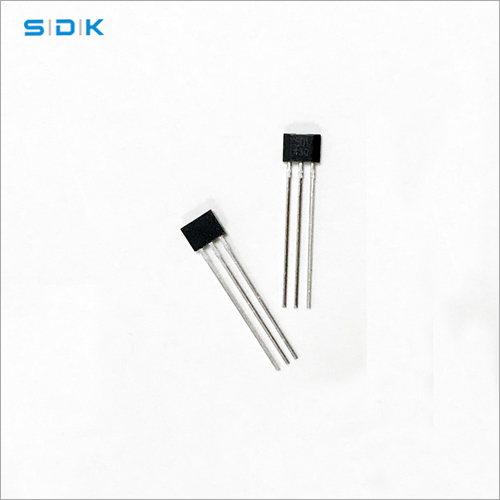
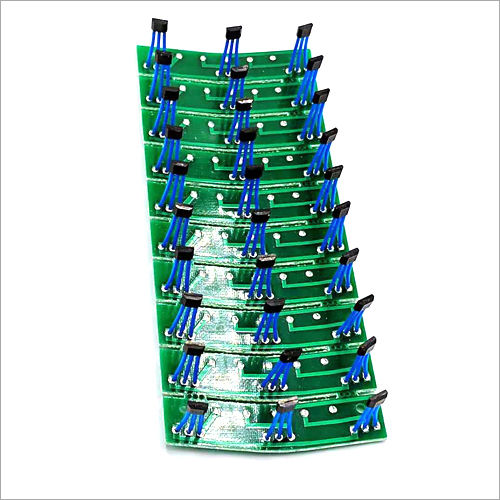
The Linear Hall-effect Position Sensor has been accessible with a wide variety of solutions. This is suited for level as well as position sensing. The designers are free to select the optimum packages and technologies so as to fulfill their commercial as well as engineering requirements. Linear Hall-effect Position Sensor boasts of an optimum hall-effect technology. It assists in the contactless magnetic sensing and is appreciable for its excellent value and dependability. This is a perfect example of latest development and has been designed to enhance the position sensing as well as level sensing results.
Precision Sensing in Challenging EnvironmentsEngineered for industrial use, this position sensor delivers contactless, high-accuracy detection even in harsh conditions. The aluminium alloy housing, combined with IP65 environmental protection, ensures resilience against dust, moisture, and temperature extremes. Adjustable magnetic sensitivity accommodates diverse measurement requirements, making it an excellent fit for robust automation processes.
Ease of Installation and Flexible ConfigurationWith its fixed mounting type and customizable cable length, the sensor is easy to integrate into existing systems. It supports both 3-wire and 4-wire connections, facilitating compatibility with a wide range of control and monitoring equipment. The compact design allows for versatile positioning, even in space-constrained applications.
FAQs of Linear Hall Effect Position Sensor:
Q: How is the Linear Hall Effect Position Sensor installed in industrial equipment?
A: The sensor is designed with a fixed mount, allowing for secure installation onto machinery or measurement setups. Its compact dimensions and customizable cable length simplify integration into existing systems. For wiring, either 3-wire or 4-wire connections can be used as per the system interface requirements.
Q: What types of position detection applications benefit from this sensor?
A: This sensor is ideally suited for position detection and displacement measurement tasks in industrial automation, robotics, conveyor systems, and equipment monitoring where contactless, high-precision linear output is required. Its high-resolution and rapid response make it valuable for real-time feedback in system controls.
Q: When is it necessary to adjust the sensitivity, and how is it done?
A: Adjusting sensitivity is beneficial when varying magnetic field strengths or sensing distances are encountered. Sensitivity is tuned by modifying the magnetic field strength, either by changing the magnet used or its distance relative to the sensor, to achieve the desired output response for specific application needs.
Q: Where can this sensor be used considering its environmental resistance?
A: Thanks to its IP65-rated protection, the sensor excels in environments where dust and moisture are present, such as manufacturing plants, outdoor installations, warehouses, or processing lines. Its operational temperature range from -40C to +125C also enables deployment in extreme hot and cold climates.
Q: What benefits does contactless position sensing provide for industrial systems?
A: Contactless sensing minimizes mechanical wear, enhances sensor longevity, and reduces maintenance needs, supporting over 10 million reliable operations. This ensures consistent performance over time, even under continuous industrial use, improving process reliability and uptime.
Q: How is overvoltage and reverse polarity protection achieved in this sensor?
A: The sensor is equipped with built-in circuits that shield it from accidental overvoltage and incorrect wiring of power supply. This protection extends sensor lifespan and safeguards connected systems against power-related faults, offering dependable operation within the specified 3.0 V to 24 V DC range.


 Send Inquiry






 English
 Spanish
 French
 German
 Italian
 Chinese (Simplified)
 Japanese
 Korean
 Arabic
 Portuguese
 Send Inquiry

 Send Inquiry
 Call Me Free